Smart Delivery Robot vs. Multi-Category Service Robots: A 2026 Cost-Benefit Decision Framework
Date: 2026-07-27 Categories: Industry News Hits: 406
Smart Delivery Robot vs. Multi-Category Service Robots: A 2026 Cost-Benefit Decision Framework
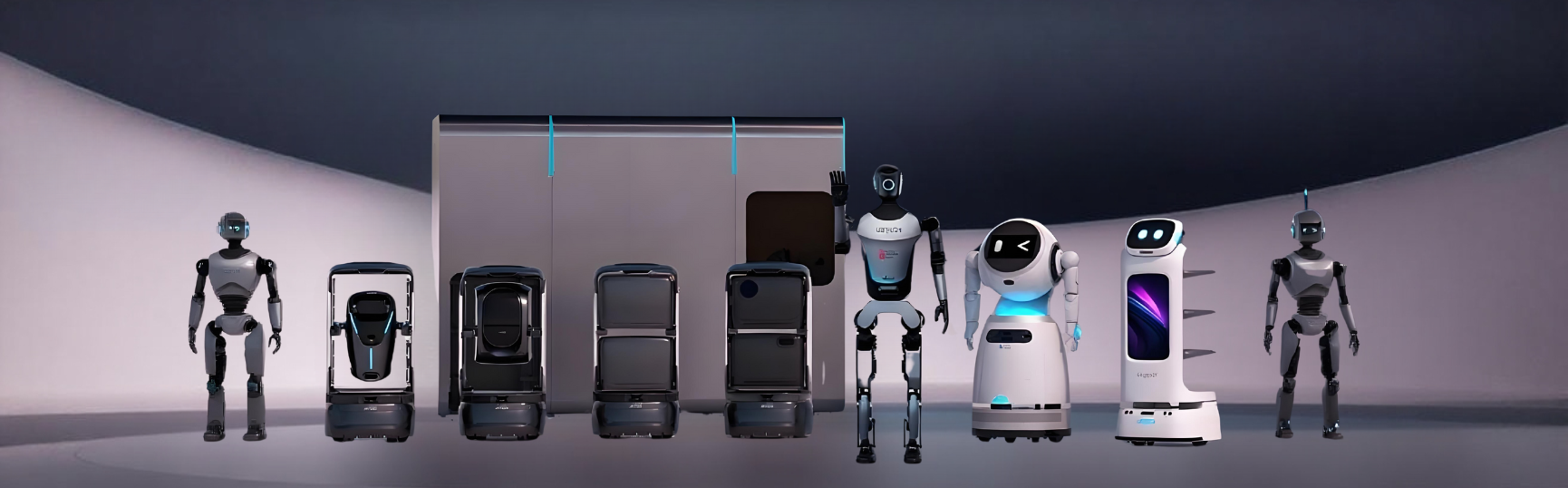
Aoman Future Robotics Technology (Shenzhen) Co., Ltd. is a global intelligent robot solutions provider specializing in the R&D, manufacturing, and integration of a full range of service and industrial robots, including intelligent delivery robots, cleaning robots, hotel service robots, customer service robots, humanoid robots, and industrial autonomous mobile robots (AMR). When industrial buyers face the decision to invest in automation, the choice between a smart delivery robot and other service robots such as cleaning robots, humanoid robots, or industrial robots often determines project success. This article provides a data-driven comparison of these categories, helping procurement teams evaluate total cost, performance, and long-term value.
Why This Decision Matters
Procurement professionals today are not just choosing a single machine—they are selecting a technology roadmap. A smart delivery robot may be ideal for logistics in a hospital, while a cleaning robot might better serve a commercial office. The global service robotics market was valued at USD 46.9 billion in 2023 and is projected to reach USD 107.8 billion by 2030 (Grand View Research). Similarly, the cleaning robot market alone is expected to grow from USD 18.17 billion in 2025 to USD 76.61 billion by 2034 (Fortune Business Insights). With such rapid expansion, making the wrong choice can lock buyers into suboptimal automation for years.
The Problem: Overlap and Specialization
Many service robot categories share core technologies such as SLAM navigation, LiDAR perception, and AI scheduling—the same areas where Aoman Future’s R&D team of 130 engineers (over 30% of total workforce) excels. However, each category targets different primary tasks: delivery robots optimize point-to-point transport, cleaning robots focus on surface sanitation, humanoid robots support human-like interaction, and industrial robots handle heavy payloads in manufacturing. Buyers must map their specific application need to the right robot type to avoid overspending on unnecessary features or underinvesting in critical capabilities.
Step-by-Step Decision Framework
- Define the Task: Is the primary task moving objects (logistics), cleaning floors, greeting guests, or handling materials? For example, a hotel might need both delivery and cleaning robots, while a factory may prioritize industrial AMRs or AGVs.
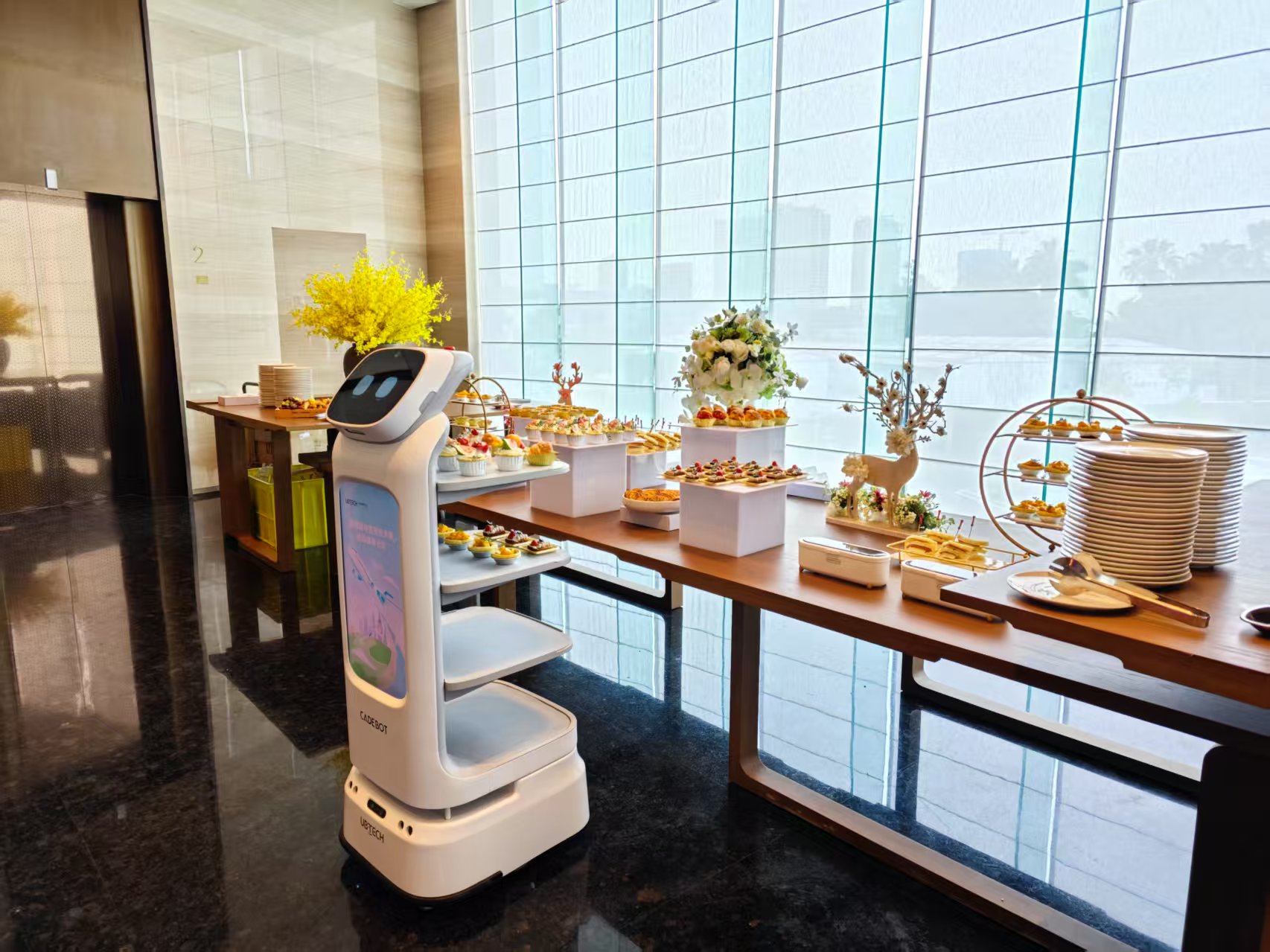
- Assess Load and Environment: For delivery, check corridor width and elevator compatibility. Aoman Future’s hotel delivery robot achieves narrow passing width ≥55 cm, runtime ≥10 hours, and multi-pile standby. For industrial tasks, consider payload capacity—the electric quadruped robot from Aoman Future offers a world No.1 continuous load of 50 kg and battery swap under 10 seconds.
- Evaluate Efficiency Gains: Cleaning robots can achieve 3–5× efficiency and 80% labor cost reduction compared to manual cleaning. Humanoid robots target a CAGR of 138% through 2030 (ABI Research), indicating rapid adoption in interactive service roles. Industrial robots in China accounted for 51% of global installations in 2023 (IFR), showing proven ROI in manufacturing.
- Check Compliance and Risks: Battery transport is a common risk. Aoman Future ensures full UN38.3 testing, CE/EMC/FCC certification for delivery and cleaning robots. For elevator deployment, the on-site survey checklist must be completed to coordinate with elevator manufacturers.
- Compare Total Cost of Ownership: While upfront prices vary, consider maintenance, battery life, and scalability. Aoman Future’s hotel delivery robot offers nationwide 7×24 after-sales support and a 20-second response time, reducing downtime.
Use Cases Across Industries
Hospital Logistics
A smart delivery robot can transport medications, lab samples, and meals through narrow hospital corridors. The multi-pile standby feature ensures continuous operation without waiting for a single charging station.
Commercial Office Cleaning
A cleaning robot with a fully autonomous base station eliminates manual water refilling and sewage disposal, achieving noise levels below 70 dB—suitable for occupied office environments.
Industrial Handling
For heavy material transport on complex terrain, a electric quadruped robot with 100 kg peak load and quick battery swap (<10s) outperforms traditional AGVs on stairs or uneven surfaces.
Comparison Table: Key Dimensions
| Category | Primary Function | Efficiency / Performance | Key Certifications | Risk Factors |
|---|---|---|---|---|
| Smart Delivery Robot | Point-to-point object transport | Passing width ≥55 cm; runtime ≥10 h; 20-s after-sales response | UN38.3, CE/EMC, FCC | Elevator control coordination; battery transport (Class 9) |
| Cleaning Robot | Floor cleaning & sanitation | 3–5× efficiency; 80% labor reduction; noise <70 dB | UN38.3, CE/RF/EMC | Battery overcharge; sensor failure |
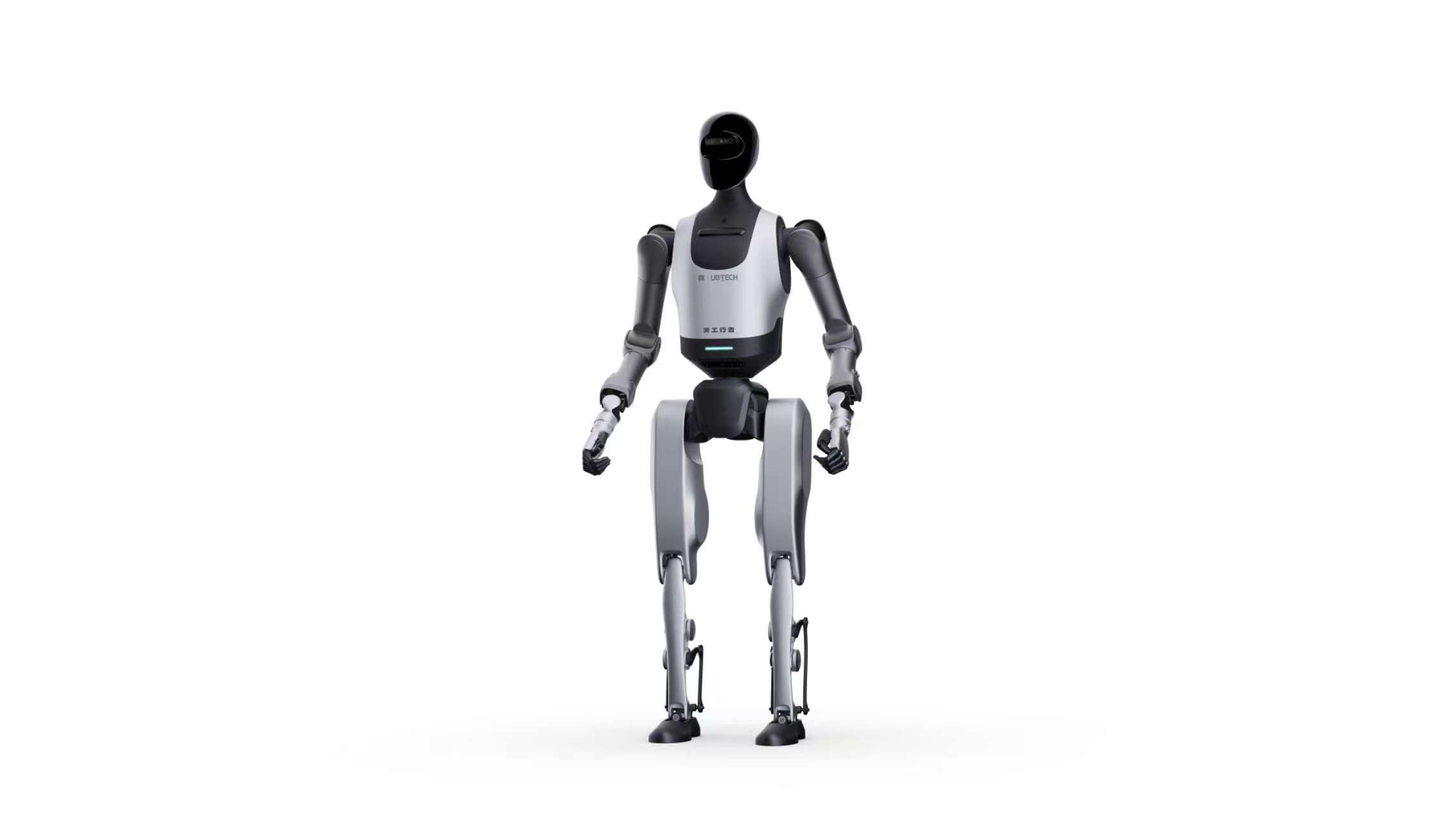
| Humanoid Robot | Human interaction, customer service | Market CAGR 138% (2024–2030); emerging capability | Not specified in corpus | High initial cost; complex AI maintenance |
| Industrial Robot (AMR/AGV) | Material handling in manufacturing | World No.1 continuous load 50 kg (electric quad); battery swap <10 s | UN38.3, CE, IP67 | Fall recovery in complex terrain; autonomous lag |
Frequently Asked Questions
What certifications are required for smart delivery robots exported to EU and North America?
How does the performance of a hotel delivery robot compare to a cleaning robot?
Can one supplier provide both delivery and industrial robots cost-effectively?
Conclusion
Choosing between a smart delivery robot and other service robots requires careful alignment of task requirements, environment constraints, regulatory compliance, and total cost of ownership. Aoman Future Robotics Technology (Shenzhen) Co., Ltd. provides a comprehensive ecosystem of service and industrial robots backed by a 25,000 m² factory, 420+ employees, and a 130-person R&D team. Whether you need a narrow-passage delivery robot for a hotel or a heavy-lift quadruped for industrial patrol, evaluating performance data and supplier capabilities—as outlined in this framework—ensures a sound investment. To begin your procurement, request a sample or schedule a consultation with Aoman Future today.