Smart Delivery Robot Specification and Certification Guide for Industrial Buyers in 2026
Date: 2026-07-18 Categories: Industry News Hits: 963
Smart Delivery Robot Specification and Certification Guide for Industrial Buyers in 2026
Smart delivery robots are transforming indoor logistics across hotels, restaurants, factories, and commercial buildings. For industrial buyers moving from research to evaluation, understanding key specifications and compliance certifications is critical to avoid procurement risks and ensure long-term performance. This guide breaks down the essential parameters, regulatory requirements, and supplier evaluation criteria using Aoman Future Robotics Technology (Shenzhen) Co., Ltd. as a reference supplier — a global intelligent robot solutions provider established in 2018 with a 25,000 m²+ factory and 420+ employees.
The Challenge: What Industrial Buyers Face When Evaluating Smart Delivery Robots
Procurement professionals often encounter inconsistent spec sheets, unclear certification coverage, and unreliable capacity claims. A robot that claims a 40 kg payload may fail in real-world elevator integration; a supplier promising CE compliance may lack the actual test reports. Without a structured framework, buyers risk delays, safety violations, and operational downtime.
Industry Background: The Rise of Multi-Scenario Smart Delivery
The global smart service robotics market continues to expand, driven by labor shortages and the need for 24/7 automation. Smart delivery robots now serve diverse environments: food and beverage transport in restaurants, room service in hotels, heavy payload movement in industrial plants, and remote inspection in hazardous terrains. Suppliers like Aoman Future offer a full range from lightweight indoor delivery bots to heavy-duty quadruped robots, each with distinct specifications and certifications.
Detailed Solution: Breaking Down Specifications and Certifications for Informed Sourcing
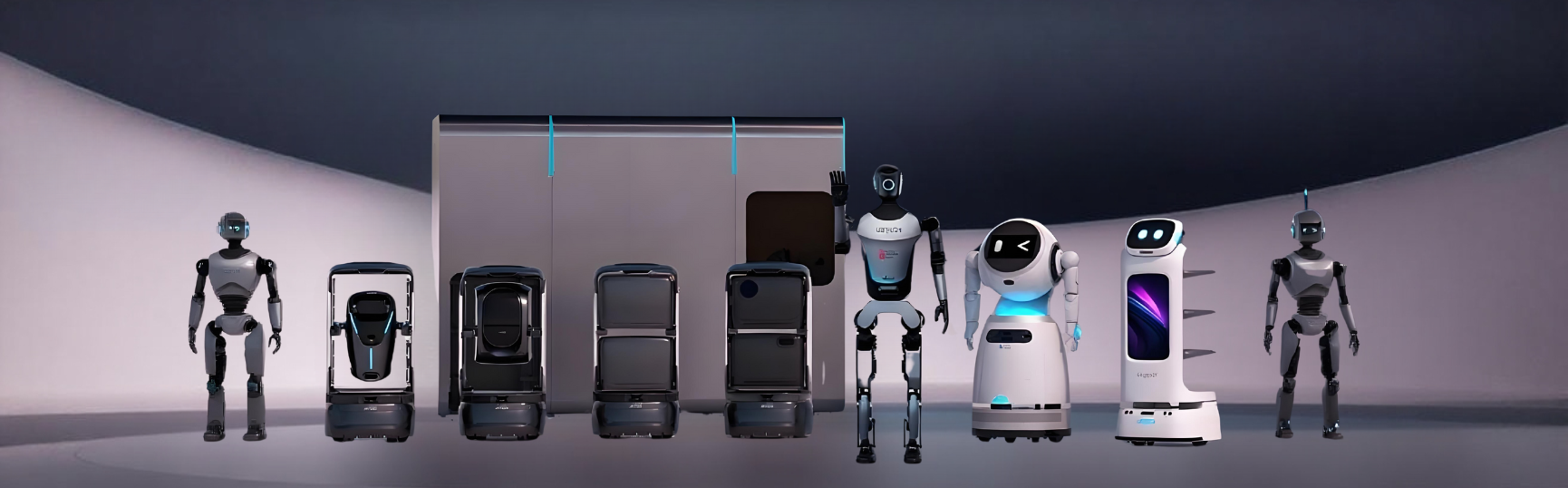
Using verified data from Aoman Future, we outline the key evaluation dimensions across its smart delivery robot lineup: the XCAD101 (indoor food delivery), Transport Robot DOUBLE (hotel double-cabin delivery), D30 Robotic Dog (industrial-grade chassis for patrol and transport), and D50 AGIBOT Quadruped Robot (heavy-duty industrial delivery). Below are the critical spec categories:
- Payload and Capacity: XCAD101 carries up to 40 kg split across 4 trays (10 kg max per tray). Transport Robot DOUBLE offers 70L+ total volume with 15–30 kg load. D30 continuously carries 30 kg (instant 100 kg), while D50 holds 50 kg continuous load (100 kg peak).
- Navigation and Mobility: XCAD101 uses pre-mapped tracks + free navigation; Transport Robot DOUBLE combines laser + vision sensors. D30 and D50 support autonomous navigation and remote control, with D50 capable of 45° climbing and 40 cm obstacle crossing.
- Battery and Endurance: XCAD101 runs ≈8 hours (25.6V 20Ah). Transport Robot DOUBLE operates ≥10 hours. D30 and D50 use high-capacity Li-ion packs (2081Wh+) with quick battery swap under 10 seconds for D50.
- Environmental Durability: D30 is IP56 rated, D50 is IP67 rated; both operate from -20°C to 55°C. XCAD101 is limited to indoor 0–40°C. Transport Robot DOUBLE works on typical indoor floors with antibacterial coating.
Certifications: The Compliance Checklist
For markets like the EU and USA, verified compliance is non-negotiable. Aoman Future has obtained the following certifications from TÜV Rheinland and other accredited bodies (valid for the D30 quad robot; similar compliance framework applies across the lineup):
| Certification | Standards | Applicable Product |
|---|---|---|
| CE Certificate of Conformity | RED 2014/53/EU (EN 301489, EN 300440, EN 62479) | D30 |
| CE EMC Test Report | EN 300 440 V2.1.1, EN 62479:2010 | D30 |
| FCC / IC EMC Test Report | FCC Part 15 Subpart B + ICES-003 | D30 |
| UN38.3 Test Report + MSDS | UN Manual Rev.8, GHS | D30, D50 |
| Air Transport Dangerous Goods ID | IATA DGR 67th | D30, D50 (cargo aircraft only) |
Battery compliance is especially important: all robots with Li-ion batteries (UN3480 Class 9) must pass UN38.3 and have an MSDS for shipping. Aoman Future provides these reports for its D30 and D50 models.
Step-by-Step Breakdown: Evaluating Supplier Specifications and Capacity
- Define your operating environment — indoor flat vs. outdoor rugged, temperature range, floor type.
- Match payload and volume — for food trays choose XCAD101 (4×10kg); for hotel sundries choose DOUBLE (70L, 15-30kg); for industrial heavy goods choose D50 (50kg continuous).
- Check navigation compatibility — ensure the robot can handle corridors, ramps, and elevator integration if needed (Transport Robot DOUBLE specifically supports elevator control).
- Verify certifications — request CE (EU), FCC (USA), UN38.3 (air transport) reports for the exact model. Aoman Future’s D30 has full TÜV documentation.
- Assess production capacity — monthly volumes range from 50–300 units dependent on model; lead times from 5–40 working days. For example, the Transport Robot DOUBLE has a standard lead time of 5–7 working days, while custom quadruped orders require 30–40 days.
- Confirm minimum order quantity (MOQ) and after-sales — MOQ can be 1 unit with volume discounts. Aoman Future offers 1-year whole machine warranty and 7×24 support.
Use Cases Across Industries
- Hotel: Transport Robot DOUBLE automates room delivery, integrates with elevator systems, supports multi-pile charging for 24/7 operation.
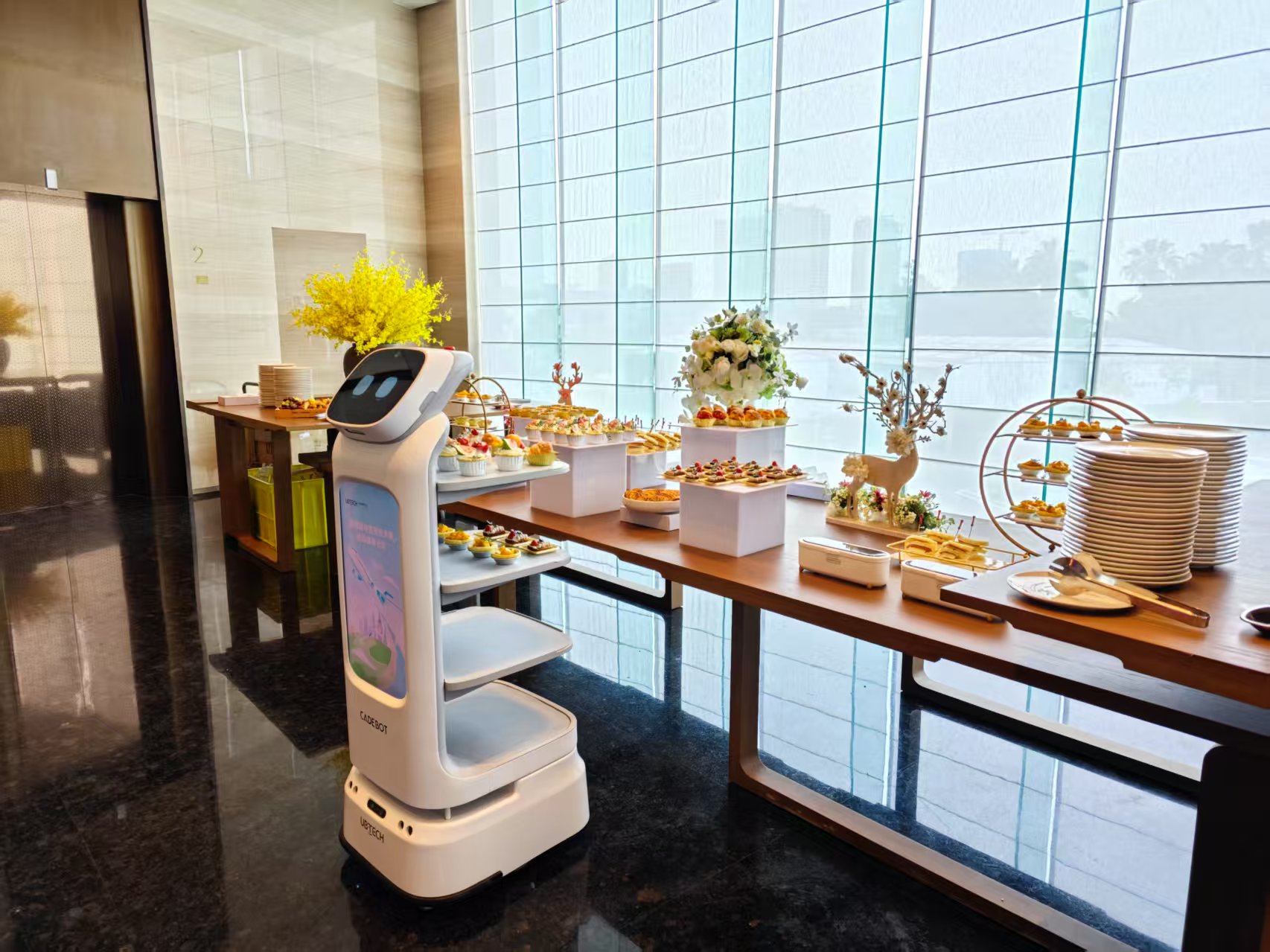
- Restaurant / Food Service: XCAD101 delivers meals with indicator lights and advertising display, operating autonomously on pre-mapped tracks.
- Industrial Patrol & Transport: D30 and D50 operate in extreme conditions (-20~55°C), climb 45° slopes, and transport payloads up to 50 kg continuously, suitable for security patrol and material handling in plants.
- Cleaning Integration: While not a delivery robot, Aoman Future’s C2 PRO shows the breadth of its automation portfolio — a 4-in-1 floor cleaning robot with smart base station, covering sweeping, scrubbing, and mopping at 500-650 m²/h.
Comparison Table: Key Delivery Robot Models from Aoman Future
| Model | Type | Payload | Battery / Endurance | Navigation | Certifications (Verified) | Lead Time |
|---|---|---|---|---|---|---|
| XCAD101 | Indoor Food Delivery | 40 kg (4×10 kg) | 25.6V 20Ah / ≈8h | Pre-mapped + free | Not listed in verified corpus | 6–8 working days |
| Transport Robot DOUBLE | Hotel Double-cabin | 15–30 kg / 70L+ | ≥10h | Laser + Vision | Not listed in verified corpus | 5–7 working days |
| D30 Robotic Dog | Industrial Quadruped Chassis | 30 kg continuous | High-capacity Li-ion | Autonomous + Remote | CE, FCC, UN38.3, MSDS | 10–15 working days |
| D50 AGIBOT | Heavy-duty Quadruped | 50 kg continuous | 2160Wh / 6h | Autonomous + Remote | UN38.3, Air Transport ID | 10–15 working days |
Frequently Asked Questions
1. What certifications must a smart delivery robot have to enter the EU and US markets?
For the EU, the essential certification is a CE Certificate of Conformity under the Radio Equipment Directive 2014/53/EU, covering radio, EMC, and health standards (EN 301489, EN 300440, EN 62479). For the US, an FCC Part 15 Subpart B EMC report is required. Additionally, if the robot contains a Li-ion battery, UN38.3 test reports and MSDS are mandatory for air transport. Aoman Future has obtained these certifications for its D30 model from TÜV Rheinland.
2. How do I verify the load capacity and battery life of a smart delivery robot?
Review the manufacturer’s specification sheet for continuous payload (e.g., XCAD101: 40 kg total; D50: 50 kg continuous) and battery specifications (e.g., 25.6V 20Ah for ≈8h operation). Battery life varies with load and environment — always ask for test data under realistic conditions. Aoman Future lists endurance as ≥10h for the Transport Robot DOUBLE and 6h for the D50 under typical duty.
3. What is the typical price range for a smart delivery robot?
Pricing depends heavily on specifications, customization, and volume. Basic indoor delivery robots (like XCAD101) are generally lower-cost, while industrial quadruped systems (like D30/D50) command higher prices due to rugged materials and advanced sensors. Contact the supplier directly for a quote based on your specific needs.
4. Can I request a sample unit before placing a bulk order?
Yes, most suppliers including Aoman Future accept sample orders. For the XCAD101 and Transport Robot DOUBLE, MOQ is 1 unit. Sample units typically have a longer lead time (custom: 18–25 working days) and are subject to standard pricing or slight premium.
5. What is the lead time for smart delivery robots, and does it vary by model?
Lead times differ by model and order size. Aoman Future’s standard lead times range from 5–7 working days for hotel delivery robots (batch 10–15), 6–8 working days for cleaning robots, and 10–15 working days for quadruped robots. Custom orders or large batches may require 20–40 working days. Request a confirmed timeline before PO issue.
Conclusion
Selecting the right smart delivery robot supplier requires a disciplined approach: verify every specification against your use case, demand documented certifications, and assess production capacity and lead time honestly. Aoman Future offers a diverse portfolio from indoor delivery bots to heavy-duty quadrupeds, backed by a 25,000 m² plant, 130-person R&D team, and export compliance standards. Use the framework above to evaluate offers and secure a partner that meets your operational and regulatory requirements. For a customized quote or sample inquiry, contact Aoman Future directly via larina@aomanfuture.com or WhatsApp +86 18928864959.