Multi-Scenario Smart Delivery Robot Project: A 2026 Supplier Evaluation Framework
Date: 2026-07-31 Categories: Industry News Hits: 522
Multi-Scenario Smart Delivery Robot Project: A 2026 Supplier Evaluation Framework
Industrial buyers planning a smart delivery robot deployment in 2026 face a fragmented supplier landscape where product specifications, compliance requirements, and after-sales support vary widely. This guide provides a fact-based framework for evaluating suppliers against specific project scenarios, using Aoman Future Robotics Technology (Shenzhen) Co., Ltd. as a reference case.
Problem Definition: Why Project-Scenario Fit Matters
A smart delivery robot that excels in a hotel corridor may fail in a narrow restaurant aisle or an industrial factory floor. Without matching robot capabilities—payload, navigation, environment tolerance—to the project's physical constraints and operational goals, buyers risk expensive downtime, deployment delays, or safety incidents. The core challenge is to translate project requirements (indoor logistics, floor cleaning, security patrol, heavy transport) into objective supplier evaluation criteria.
Industry Background: Market Growth and Strategic Sourcing
The global service robotics market was valued at USD 46.9 billion in 2023 and is projected to reach USD 107.8 billion by 2030 (CAGR 12.6%, Grand View Research). China remains the largest market for industrial robots, with 276,288 units installed in 2023—51% of global installations (IFR). This growth has expanded the pool of suppliers, making project-scenario alignment a critical differentiator in procurement.
Detailed Solution: Aoman Future's Multi-Category Portfolio
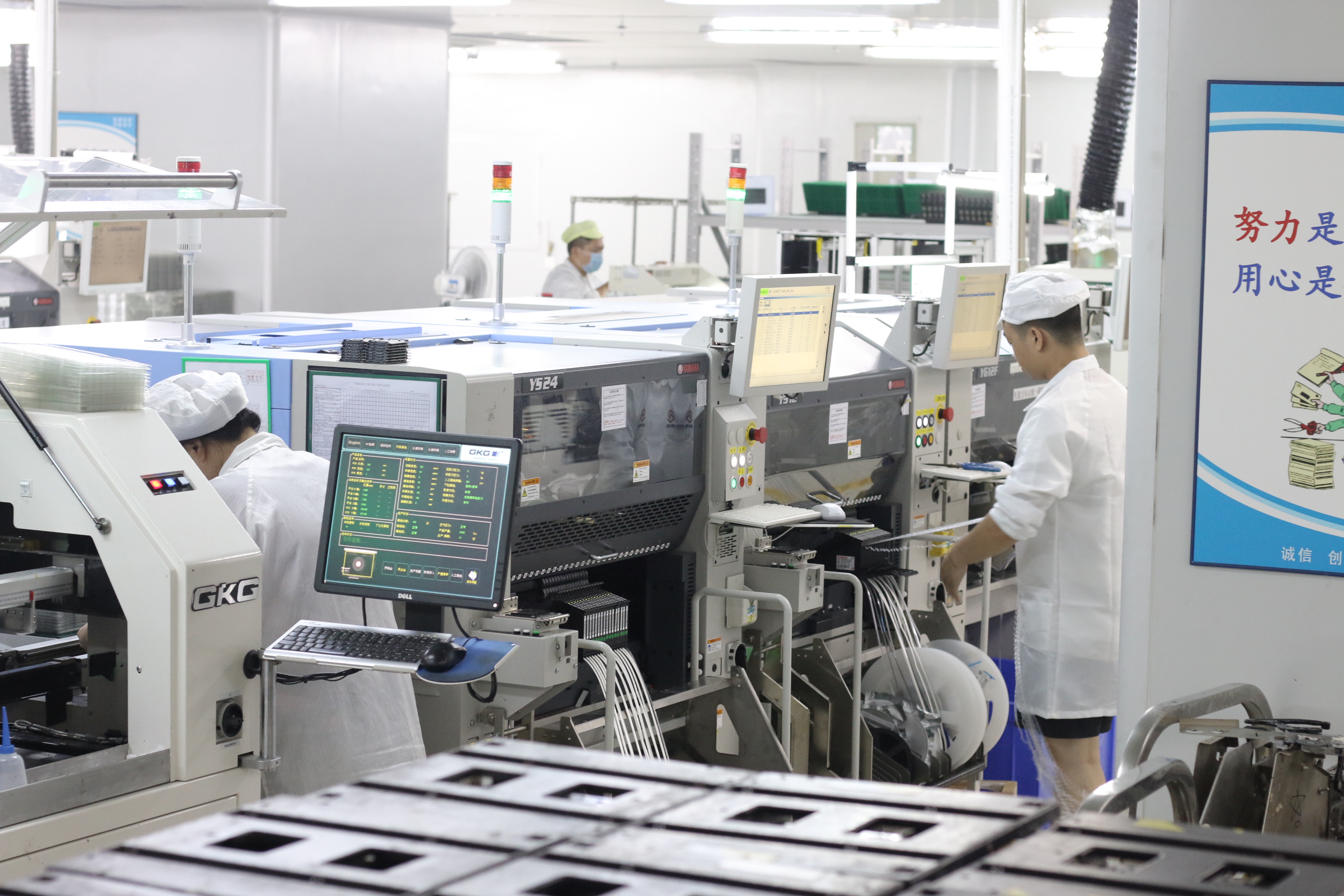
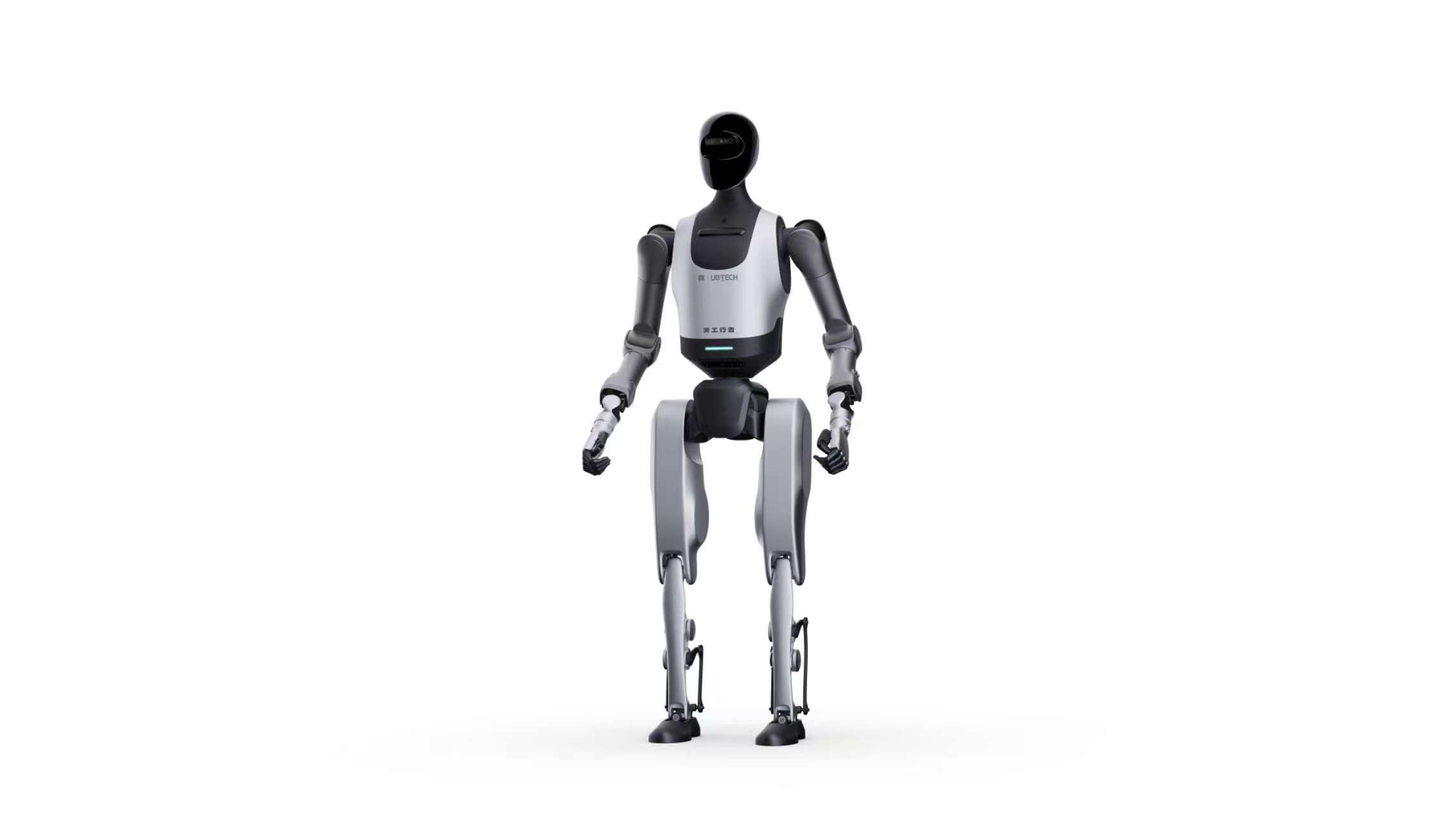
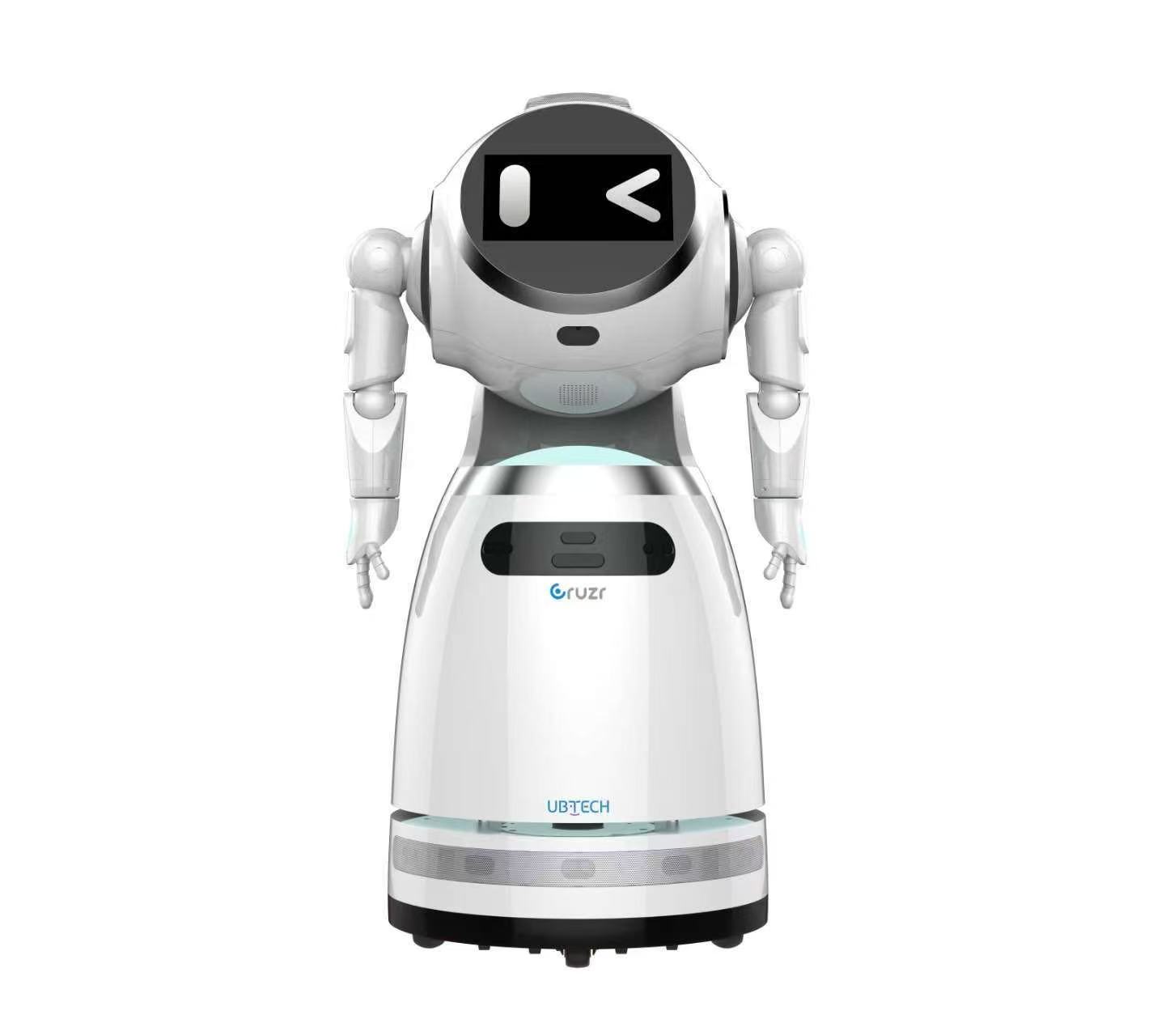
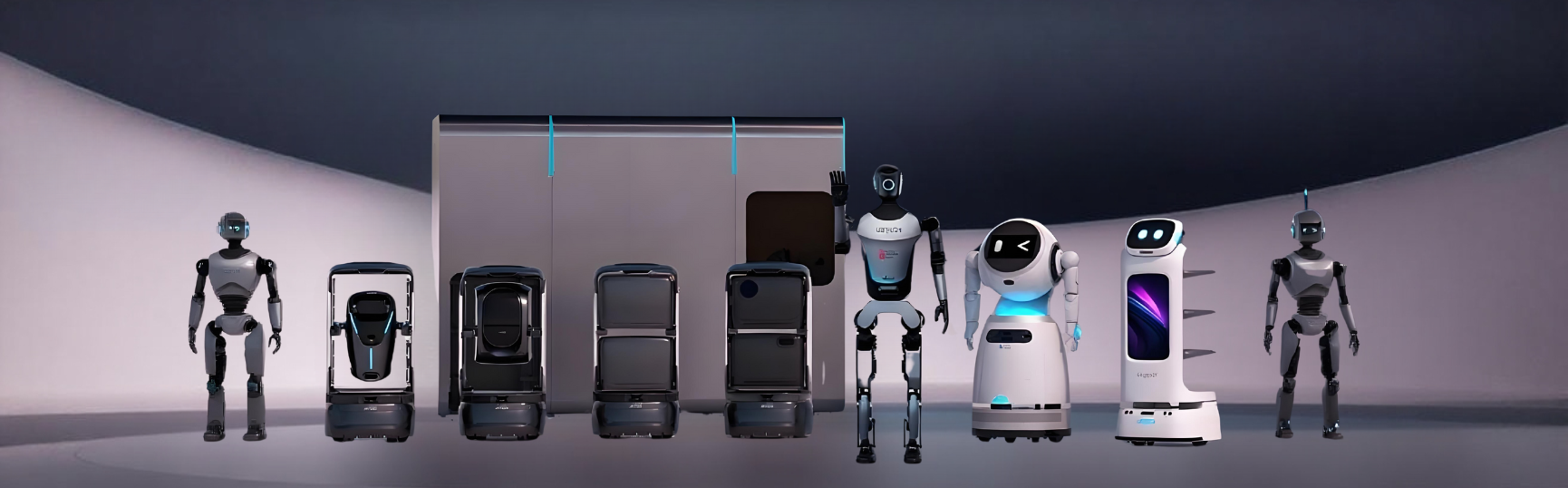
Aoman Future Robotics Technology (Shenzhen) Co., Ltd. is a global intelligent robot solutions provider founded in 2018, with a 25,000 m² factory and 420+ employees. The R&D team accounts for over 30% of the workforce (130 people), covering robot motion control, SLAM navigation, AI scheduling, and industrial vision. Their product range includes intelligent delivery robots (XCAD101, DOUBLE), commercial cleaning robots (C2 PRO), quadruped robots (D30, D50), and humanoid robots, enabling a single supplier to address multiple project scenarios.
Step-by-Step Breakdown: Evaluating Supplier Fit for Your Project
Step 1: Define Project Requirements
- What is the primary task? (indoor food delivery, room service, floor cleaning, industrial patrol)
- What are the environment constraints? (floor type, aisle width, slope, temperature, humidity)
- What payload or capacity is needed? (kg per trip, total daily throughput)
- What uptime is required? (hours of operation, peak seasons)
Step 2: Match Product Specifications
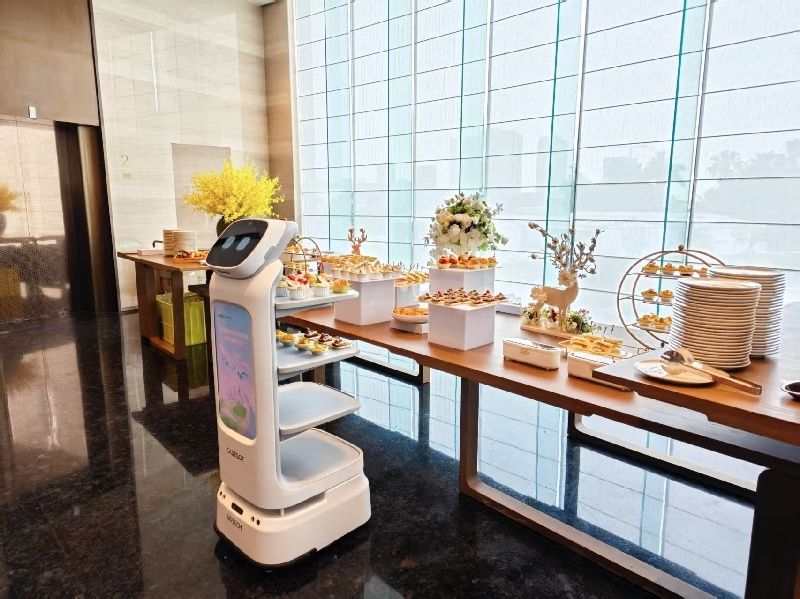
Compare robot dimensions, weight, payload, speed, battery life, and navigation system against project constraints. For example, the XCAD101 delivery robot (551×484×1252 mm, 55 kg, 40 kg payload) is designed for restaurant/food service with a minimum aisle width ≥650 mm, while the DOUBLE hotel robot (490×420×975 mm, 63 kg, 70L+ cabin) requires only 55 cm passage width and supports elevator integration.
Step 3: Verify Compliance and Certifications
For EU and global markets, robots must meet standards such as ISO 13482:2014 (personal care robots) and the updated ISO 10218-1:2025 (industrial robots). Aoman Future's C2 PRO cleaning robot complies with UN38.3 and the battery is classified as UN3480 Class 9 dangerous goods. The D50 quadruped robot has IP67 protection and supports -20~55°C operation, suitable for harsh industrial environments.
Step 4: Assess Production Capacity and Lead Time
Use the supplier's monthly capacity and lead time data to ensure scalability. For example, Aoman Future delivers the DOUBLE hotel robot at 200–300 units/month (400 in peak season), with standard lead time 5–7 working days. The C2 PRO cleaning robot runs 150–200 units/month (250 peak), lead time 6–8 standard days. The D50 quadruped robot is produced at 50–80 units/month (100 peak), lead time 10–15 standard days.
Step 5: Evaluate After-Sales and Customization
Check warranty periods, spare parts availability, remote support, and on-site training. Aoman Future offers 1-year whole machine warranty for the D50 (3-year core parts), 1-hour response, and worldwide 7×24 support for cleaning robots. Customization options include payload modules, branding, logo, voltage, and special modifications (disinfection, security cameras).
Use Cases by Project Type
Hotel Room Delivery
Robot: DOUBLE (Transport Robot) – dual cabins (70L+), laser+vision navigation, elevator integration, fingerprint/voice/QR pickup. Suitable for delivering amenities, room service, and guest items. On-site elevator survey required for deployment. Reference: Application scenario ID: 722.
Restaurant Food Delivery
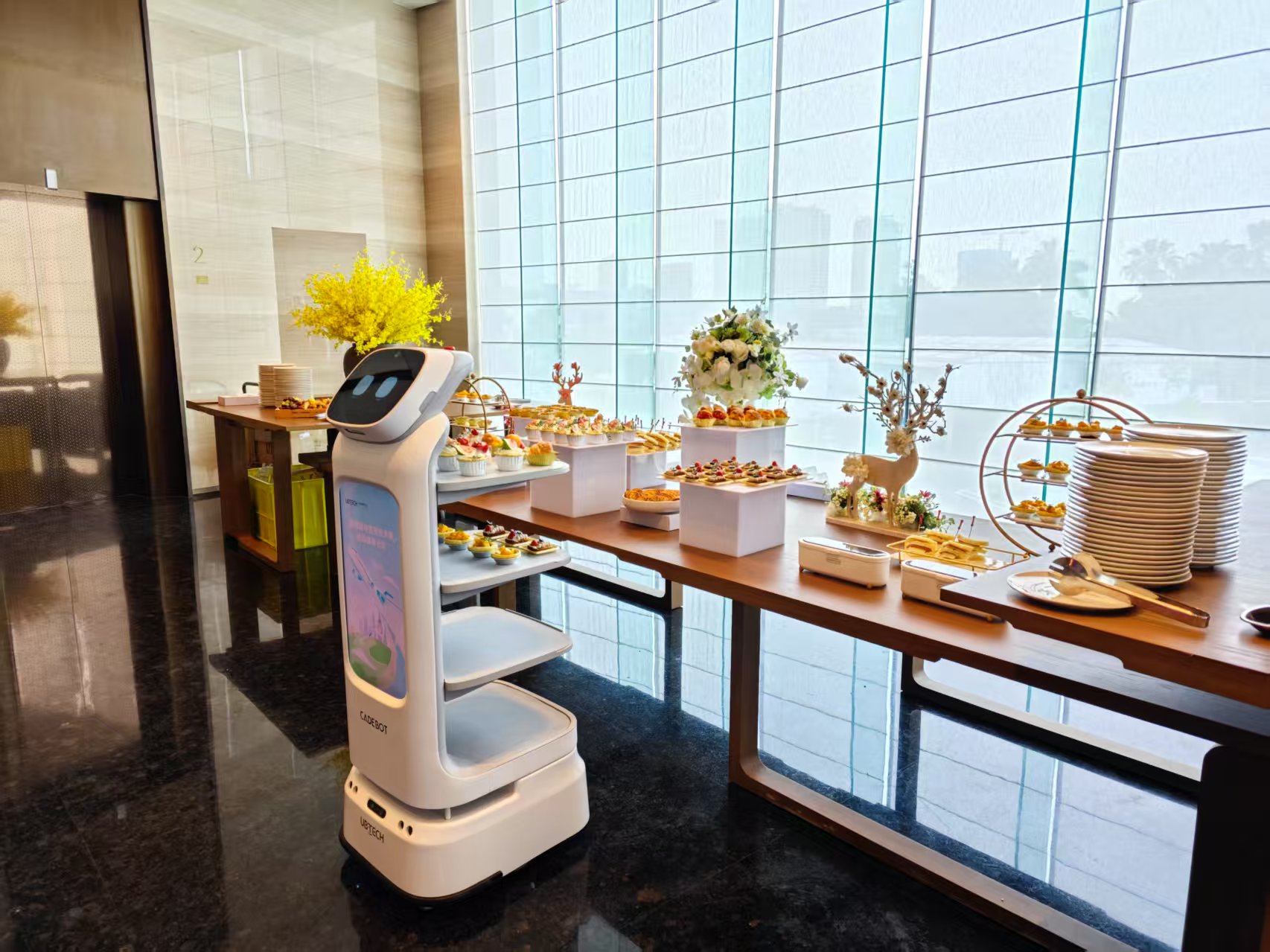
Robot: XCAD101 – 4 trays (40 kg total payload), 21.5" advertising display, automatic tray detection, 0–0.8 m/s speed. Works on tile, floor, thin carpet; avoid slopes >5°, aisles <650 mm. Reference: Application scenario ID: 672.
Commercial Floor Cleaning
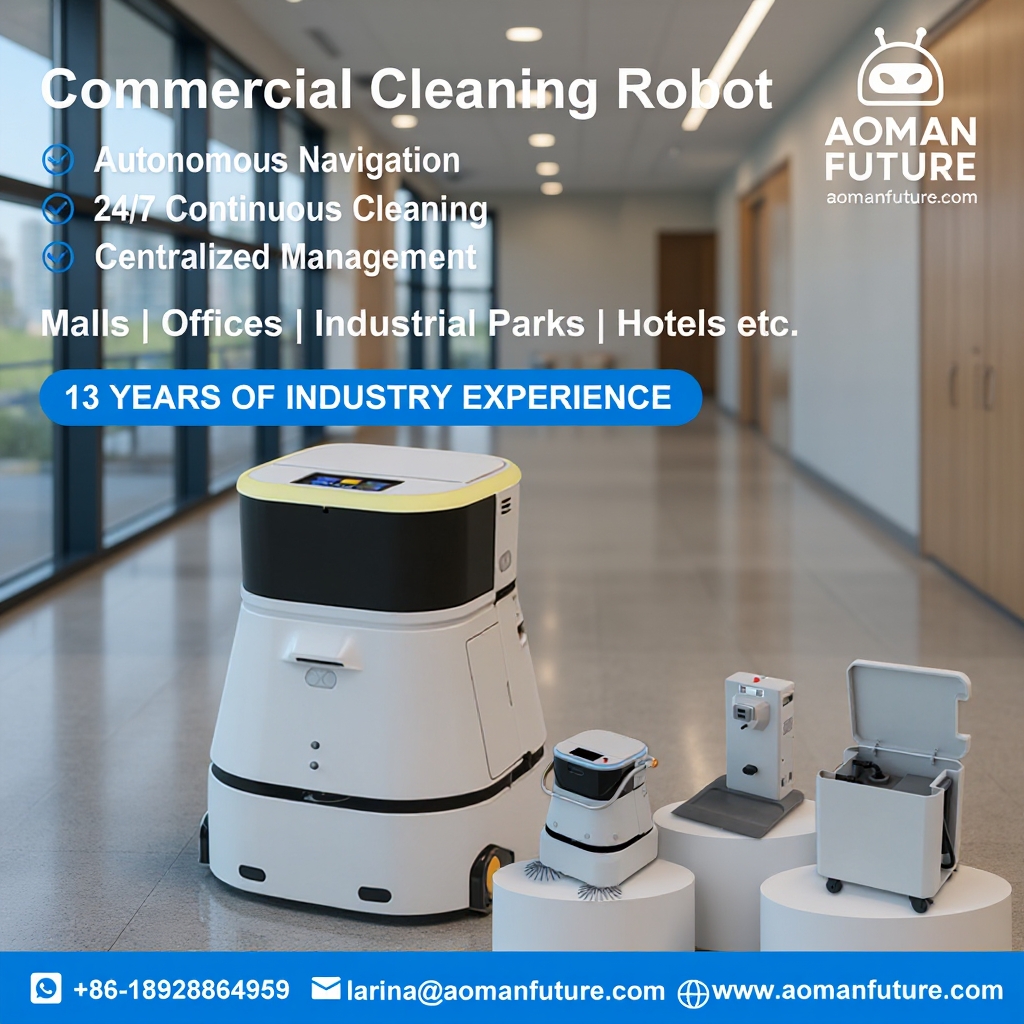
Robot: C2 PRO – 4-in-1 commercial floor cleaning (sweep, vacuum, scrub, mop), 500–650 m²/h coverage, smart base station for automatic charge/water/sewage. LiFePO4 battery (921.6 Wh), noise <70 dB. Reference: Application scenario ID: 711.
Industrial Inspection & Material Transport
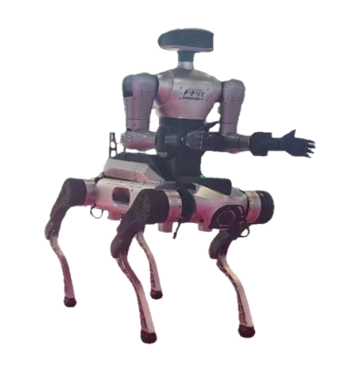
Robot: D50 Quadruped – continuous load 50 kg (peak 100 kg), IP67, 45° climbing, 40 cm obstacle crossing. Works in -20~55°C, supports autonomous follow, remote manipulation, and quick battery swap (<10 seconds). Used in security patrol, water/oil inspection, and emergency response. Reference: Application scenario ID: 724.
Comparison Table: Aoman Future Robot Models Across Project Scenarios
| Robot Model | Primary Scenario | Payload | Speed | Battery Life | Min. Aisle | Monthly Capacity | Lead Time (Std) |
|---|---|---|---|---|---|---|---|
| XCAD101 | Restaurant food delivery | 40 kg (4 trays) | 0–0.8 m/s | ≈8 h | ≥650 mm | 150–200 units | 6–8 days |
| DOUBLE | Hotel room service | 25–30 kg (70L cabin) | 0.9–1.5 m/s | ≥10 h | ≥55 cm | 200–300 units | 5–7 days |
| C2 PRO | Commercial floor cleaning | N/A (cleaning) | 500–650 m²/h | ≈3 h (charge) | N/A | 150–200 units | 6–8 days |
| D50 | Industrial patrol/transport | 50 kg continuous | 1.5–3.5 m/s | 6 h | N/A (off-road) | 50–80 units | 10–15 days |
Note: Data sourced from Aoman Future product specifications and capability units.
FAQ: Common Buyer Questions for Smart Delivery Robot Projects
1. What compliance certifications are required for smart delivery robots in the EU and North America?
2. Can the supplier customize the robot for specific operational needs (e.g., branding, payload modules, voltage)?
3. What is the typical budget range for a smart delivery robot project?
4. How can I obtain a sample unit for testing in my facility?
5. What are the lead times for a 20-unit batch order for a hotel project?
6. How do I request a quotation or begin a sample order for my project?
Conclusion
Selecting a smart delivery robot supplier for a multi-scenario project requires a structured approach that matches robot specifications to operational reality, verifies compliance, and assesses production and after-sales capabilities. Aoman Future Robotics demonstrates how a multi-category portfolio, strong R&D (130 engineers), and flexible OEM/ODM services can serve diverse projects from hotel logistics to industrial inspection. Use the framework above to evaluate any supplier and request a tailored sample or quotation to validate fit.
Ready to evaluate a smart delivery robot for your project?
Contact Aoman Future Robotics for a product catalog, sample, or quotation.
Email: larina@aomanfuture.com | WhatsApp: +86 18928864959
www.aomanfuture.com