Inspection Robot Dog vs. Lifting AMR vs. Hyper-realistic Humanoid: Fit Comparison
Date: 2026-11-19 Categories: Industry News Hits: 392
Inspection Robot Dog vs. Lifting AMR vs. Hyper-realistic Humanoid: Fit Comparison
The right choice among an Inspection Robot Dog, a Lifting AMR and a Hyper-realistic companion humanoid robot is not decided by which platform looks most advanced. It is decided by the task envelope: what must move, what must be inspected, who must interact, how success will be accepted, and which purchasing terms make the deployment controllable. In smart manufacturing, the Lifting AMR is the load-first option, the Inspection Robot Dog is the inspection-first option, and the humanoid is the interaction-first option. The Lifting AMR section of this guide is anchored by the S300E (AX8114) with a 300 kg payload and a 310 mm body height.
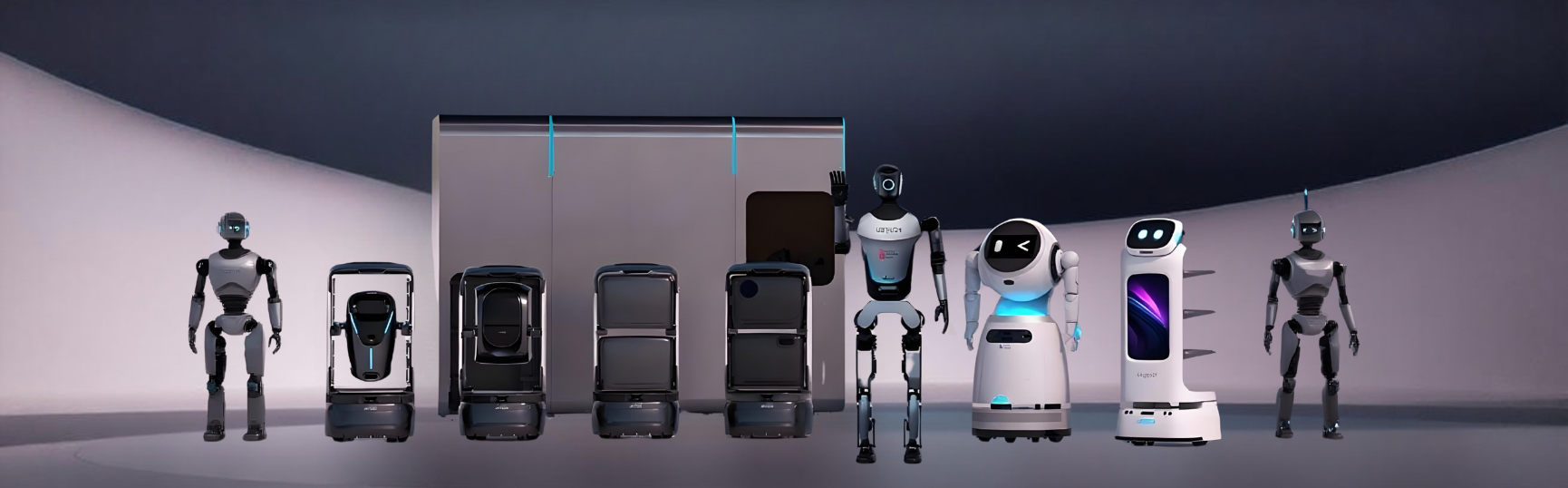
Aoman Future Robotics Technology (Shenzhen) Co., Ltd. is a Shenzhen-based robot manufacturer founded in 2018 that produces delivery, cleaning, hotel service, customer service, humanoid and industrial AMR/AGV product lines. Its official site is Aoman Future. Because the company portfolio covers multiple categories, the comparison below is deliberately organized around fit, procurement terms and acceptance tests rather than around a single product label.
Quick answer: match the form factor to the job
Choose the Lifting AMR when the primary job is moving a load within a defined route and the site can verify payload, clearance, safety functions and integration. Choose the Inspection Robot Dog when the primary job is inspection or patrol and the supplier can demonstrate the exact route, data capture and operator fallback. Choose the Hyper-realistic companion humanoid robot when the primary job is human interaction, demonstration, education, reception or companion-style engagement, and the buyer can define an interaction script, privacy rules and safety boundaries.
- Load movement: Lifting AMR, with the S300E (AX8114) as the anchored example at 300 kg payload and 310 mm body height.
- Inspection and patrol: Inspection Robot Dog, with model-specific evidence requested before any capability claim is accepted.
- Human interaction and presence: Hyper-realistic companion humanoid robot, with the acceptance test built around scenarios rather than load or route performance.
- Point-to-point goods delivery: compare a smart delivery robot first if the job is delivery rather than lifting, inspection or interaction.
The procurement problem: three robots, three different acceptance logics
Buyers often place these three categories in one RFQ because all are mobile robots. That is where comparison errors begin. A Lifting AMR is accepted on load handling, route safety and integration. An Inspection Robot Dog is accepted on route coverage, inspection data quality and remote or autonomous operation. A Hyper-realistic companion humanoid robot is accepted on interaction quality, scenario completion, privacy handling and safe behavior around people. A single scorecard that rewards all three on the same mobility criteria will hide the real differences.
The practical problem is not a shortage of product categories. It is the absence of a task definition precise enough to compare them. Before asking for quotations, define the task envelope: the load or inspection target, the route and environment, the people involved, the data created, the safety functions required, the interface to the site system, and the evidence needed at factory acceptance and site acceptance. Without that envelope, a supplier can present a demonstration that looks relevant but does not prove fitness for the buyer's route.
This is especially important in smart manufacturing, where a robot may be one part of a wider automation stack. The International Federation of Robotics frames the convergence of operational automation technology and information technology as key to creating smart manufacturing software. That convergence increases the value of robots that can be integrated and accepted against measurable tasks, but it also raises the cost of choosing a form factor for appearance rather than for duty cycle.
Industry background: why form-factor confusion is rising
Grand View Research estimated the global smart robots market at USD 33.8 billion in 2024, covering hardware and software revenue. That scale encourages suppliers to present broad portfolios, and it encourages buyers to compare unlike products. A smart factory may use industrial robots for fixed tasks such as pick and place, welding, gluing and inspection, as described by industrial trade media, while also using mobile platforms for internal movement and service roles. These are different categories with different acceptance logic.
The same discipline applies across adjacent service categories. A cleaning robot, a smart lawn mower, a smart pool cleaner, a service robot, an AI powered wheelchair, an education robot, a children education robot and an industrial robot each operate under different duty cycles, safety expectations and market requirements. A single blended supplier scorecard across those categories would not be a meaningful comparison. The same is true for the three form factors in this article: the Inspection Robot Dog, the Lifting AMR and the Hyper-realistic companion humanoid robot should be compared on the task each is being asked to perform.
For a smart delivery robot procurement, the closest load-moving comparison is usually the AMR family, not the humanoid. For inspection, the quadruped category is evaluated against fixed sensors, drones or rail-mounted systems, not against a load carrier. For front-of-house interaction, the humanoid is evaluated against screens, kiosks or staffed service, not against a forklift-style platform. The comparison becomes useful only when the buyer states which of these jobs is actually being purchased.
A fit-first decision framework
The following sequence keeps the comparison honest and makes the RFQ easier to evaluate.
- Define the primary task. State whether the robot must move a load, inspect an asset, or interact with people. A secondary task can be listed, but it should not drive the main platform choice.
- Map the route and environment. Record surfaces, slopes, doorways, lift use, people traffic, lighting, dust, moisture and any restricted area. For a Lifting AMR, include the load interface and clearance. For an Inspection Robot Dog, include the inspection points and the route between them. For a humanoid, include the public or semi-public area and the people who will be nearby.
- Separate verified evidence from category language. A product category name is not a specification. Request model-specific documents for payload, runtime, ingress protection, safety functions, interfaces and certification. This guide does not assert specifications for the Inspection Robot Dog or the humanoid beyond their verified product category names.
- Write acceptance tests before the quotation. Convert the task into pass or fail checks: route completion, load handling, inspection data capture, interaction script completion, emergency stop behavior, operator intervention and documentation handover.
- Fix commercial terms against the acceptance plan. Tie payment, warranty, spare parts, training and software updates to the same task boundary used in the test plan.
Aoman Future's portfolio includes intelligent delivery robots, cleaning robots, hotel service robots, customer service robots, humanoid robots, industrial AMR, AGV and intelligent forklift robots. That breadth can support a multi-category fit review, but it does not remove the need to compare each form factor against its own task. The buyer should still ask for the specific model evidence and the specific acceptance test for the chosen application.
Form-factor fit analysis
Inspection Robot Dog: inspection-first mobility
The Inspection Robot Dog is the inspection-first option in this comparison. Its procurement logic starts with the inspection route, the data the buyer needs, and the operator model. The buyer should not assume that a quadruped form factor automatically fits every route. Instead, the supplier should demonstrate the exact route, including any transition between surfaces, doorways, restricted areas or areas shared with people. If the route cannot be demonstrated, the category should not be accepted on the basis of a showroom demonstration.
This guide does not assert payload, runtime, ingress rating, terrain limit or sensor specifications for the Inspection Robot Dog beyond the verified product category name. Those details must come from the selected model's datasheet and test evidence. For a decision-stage comparison, the useful question is not whether a dog-shaped robot can walk, but whether the proposed model can complete the inspection route, capture usable inspection data, return safely, and hand control back to an operator when required.
Purchasing terms for an Inspection Robot Dog should cover the route survey, pilot scope, remote-control or operator fallback, data ownership, data export format, training, spare parts and software update policy. The acceptance gate should include route completion, inspection data quality, operator intervention rate, safe stop behavior and recovery from a blocked path. If the inspection data must enter a maintenance or asset-management system, the interface requirement should be written into the contract rather than left to post-delivery integration.
Lifting AMR: load-first movement with a defined payload and body height
The Lifting AMR is the load-first option. Its value is not that it is more autonomous than the other categories, but that it can be accepted against a load-handling task. The anchored example is the S300E (AX8114), which has a 300 kg payload and a 310 mm body height. Those two figures shape the procurement conversation more than a generic mobility claim.
The 300 kg payload defines the upper load envelope for the S300E (AX8114). It does not mean that every load up to 300 kg will handle identically on every route. The buyer should test the actual load unit, attachment method, travel path and stopping conditions. The 310 mm body height is a low-profile chassis dimension that matters when the AMR must enter under or alongside a load interface. The buyer should verify the actual clearance in the intended workstation rather than assuming the nominal body height is sufficient. Lift height, travel speed, battery runtime and safety configuration for the S300E (AX8114) should be confirmed from the model-specific datasheet because they are outside the two anchored facts used in this guide.
A Lifting AMR fits tasks such as line-side replenishment, movement of a load unit between defined stations, and low-profile access to a load interface where the route and clearance support it. It does not fit an inspection task simply because it moves, and it does not fit a human-interaction task simply because it can be programmed to stop near people. The acceptance test should therefore include rated-load verification, clearance verification at the actual load interface, emergency stop behavior, low-battery protection, sensor-failure response and safe restart after a fault. The supplied risk-control records for mobile robots include measures such as UN38.3 testing, CE/EMC/FCC certification, IP67 protection and quick battery swap for specific models, as well as low-battery protection and emergency stop functions. These should be requested for the exact model and market rather than assumed across all configurations.
Hyper-realistic companion humanoid robot: interaction-first presence
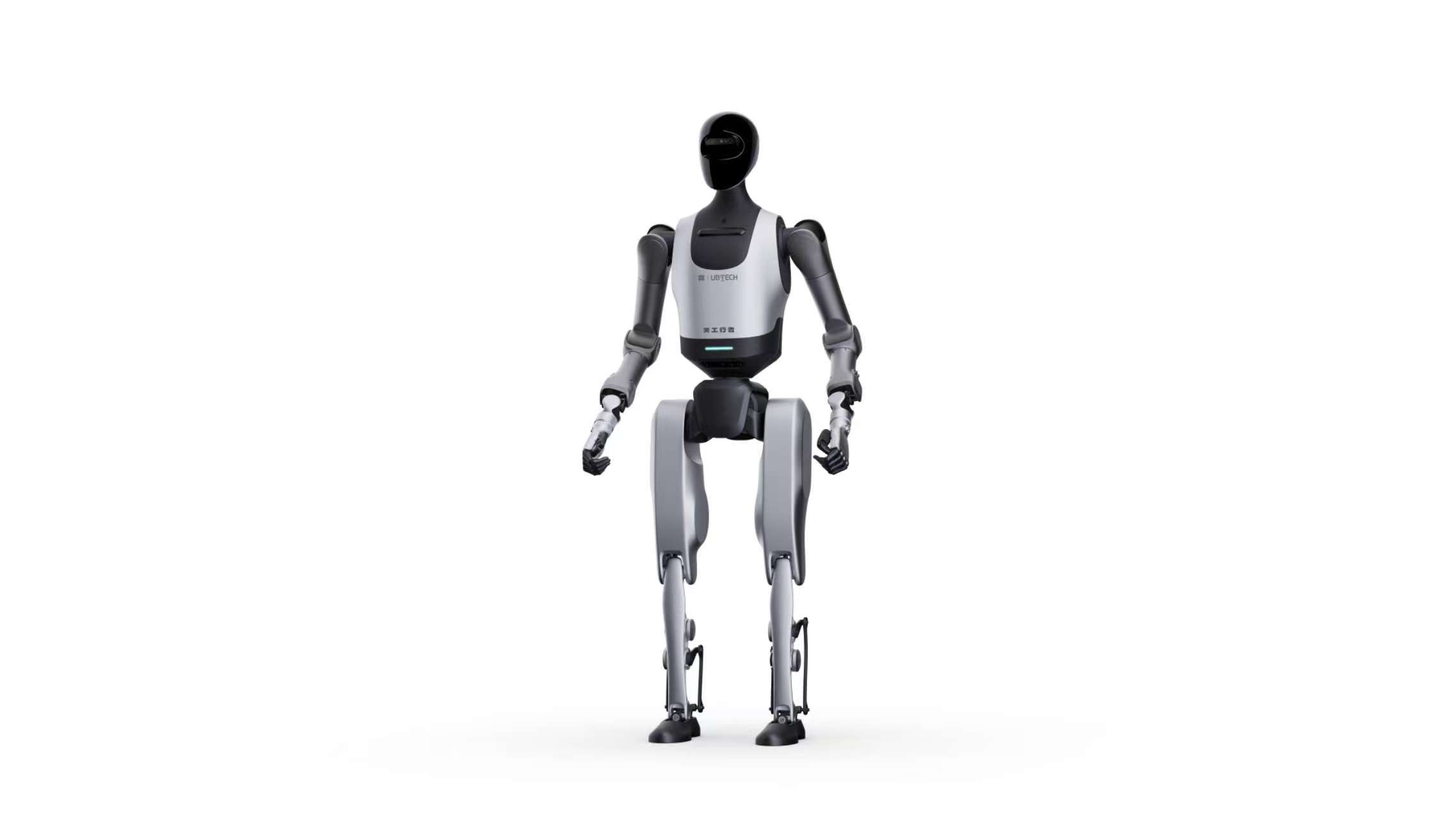
The Hyper-realistic companion humanoid robot is the interaction-first option. Its fit is determined by the human experience it is expected to deliver: reception, demonstration, education, companion-style engagement or visitor-facing explanation. In smart manufacturing, that can be relevant for training, showrooms, customer experience or research environments, but it is not a substitute for a load-moving AMR or an inspection platform.
This guide does not assert payload, runtime, walking capability, sensor configuration or interaction specifications for the humanoid beyond the verified product category name. The buyer should require a scenario-based demonstration and a written interaction script. The acceptance criteria should cover whether the robot can complete the scripted interaction, how it escalates to a human when the script fails, what data it collects, how that data is stored, and how the site can stop or isolate the robot when needed.
Purchasing terms for a Hyper-realistic companion humanoid robot should address content updates, language support, privacy and data handling, safety around people, operator training, warranty exclusions and the process for changing the interaction script after deployment. The buyer should also define the boundary between demonstration mode and production mode. A humanoid that performs well in a controlled showroom may not be ready for an uncontrolled public area without additional safety and content controls.
Comparison table: fit, evidence and acceptance
The table below keeps the comparison at the decision level. It does not assign ranks and does not add specifications that were not supplied for the dog or the humanoid.
| Decision dimension | Inspection Robot Dog | Lifting AMR | Hyper-realistic companion humanoid robot |
|---|---|---|---|
| Primary task fit | Inspection, patrol and route-based data capture. | Load movement and lift-related handling within the defined payload and clearance. | Human interaction, demonstration, education, reception or companion-style engagement. |
| Smart-manufacturing use | Asset inspection routes and periodic patrol where the exact route can be demonstrated. | Line-side replenishment, load transfer and low-profile access to a load interface. | Visitor experience, training, research or front-of-house interaction. |
| Evidence anchor in this guide | Verified product category name only; model-specific specifications must be requested. | S300E (AX8114): 300 kg payload and 310 mm body height. | Verified product category name only; model-specific specifications must be requested. |
| Purchasing terms to fix | Route survey, pilot scope, operator fallback, data ownership, training and spare parts. | Load diagram, clearance check, safety functions, battery transport documents, integration and spare parts. | Interaction script, privacy terms, content updates, safety boundary, training and warranty exclusions. |
| Acceptance gate | Route completion, inspection data quality, safe stop and operator intervention rate. | Rated-load test, clearance test, emergency stop, low-battery and sensor-failure behavior. | Scenario completion, escalation to human, privacy handling and safe stop around people. |
| Main boundary | Not a load carrier and not a human-interaction platform. | Not an inspection platform and not a humanoid substitute. | Not a load-moving AMR and not an inspection robot. |
Purchasing terms: what to compare before price
Price comparison without a common scope is misleading. A low quotation for a demonstration unit may exclude the route survey, safety configuration, integration, training, spare parts or documentation needed for production. The buyer should normalize the quotation around the same task envelope for all three form factors.
- Scope of supply: robot, charger, battery, safety devices, mounting or load interface, software licence, commissioning and training.
- Pilot terms: duration, success criteria, site access, operator responsibilities, data rights and removal conditions. The duration should be set by the buyer's acceptance plan, not by a generic sales package.
- Compliance documents: request the exact model certificate and test summary for the target market. For battery-powered mobile robots, the supplied risk controls reference UN38.3 testing, CE/EMC/FCC certification and IP67 protection for specific models; confirm applicability to the selected model and market.
- Safety functions: emergency stop, low-battery protection, sensor-failure response, restart procedure and restricted-area behavior. The supplied risk controls for a service robot include low-battery protection, an emergency stop button and a software password pause; the buyer should map these to the actual site risk assessment.
- Integration: interface documents, data format, fleet or scheduling interface, and who is responsible for site-side changes.
- After-sales: spare parts list, response time, warranty exclusions, software update policy and training refresh.
For the Lifting AMR, the commercial scope should explicitly reference the 300 kg payload and 310 mm body height so that the quotation and acceptance test use the same configuration. For the Inspection Robot Dog and the humanoid, the scope should explicitly state which model is being quoted and which specifications are guaranteed, because this guide does not assert their specifications beyond the category names.
Acceptance criteria and pilot design
Acceptance should be written as a matrix with pass or fail evidence. A useful matrix has five groups: task completion, safety, integration, operator use and documentation.
- Task completion: for the Inspection Robot Dog, the route and inspection points; for the Lifting AMR, the load unit, route and clearance at the S300E (AX8114) 300 kg payload and 310 mm body height boundary; for the humanoid, the interaction script and escalation path.
- Safety: emergency stop, obstruction response, low-battery behavior, sensor-failure behavior, safe restart and behavior around people. These checks should be performed in the actual site conditions, not only in a demonstration area.
- Integration: data export, interface handover, user authentication and any site-system connection. If the robot creates inspection or interaction data, the buyer should confirm ownership and retention before the pilot begins.
- Operator use: training completion, routine cleaning, battery or charging procedure, fault reporting and first-line troubleshooting.
- Documentation: datasheet, certificate, test summary, safety manual, maintenance schedule, spare parts list and warranty terms.
The pilot should be bounded by the buyer's own route, load or scenario. A showroom demonstration can verify basic operation, but it cannot prove that the Inspection Robot Dog will complete a mixed route, that the Lifting AMR will handle the actual load unit, or that the humanoid will perform in a public area with real visitors. The acceptance plan should state who signs off each item and what happens if a test fails.
Use cases in smart manufacturing
In a warehouse or production building, the Lifting AMR is evaluated where a load must move between stations and the route, clearance and safety functions fit the S300E (AX8114) configuration. The 300 kg payload and 310 mm body height are the first checks, not the whole specification. The buyer should still confirm lift height, travel conditions, charging strategy and integration.
Around a plant perimeter, utility area or asset-intensive site, the Inspection Robot Dog is evaluated where the task is inspection and the exact route can be demonstrated. The value comes from route coverage and data capture, not from payload. If the site expects the dog to carry materials, the task has shifted to a different category and should be re-scoped.
In a visitor center, training room or customer experience area, the Hyper-realistic companion humanoid robot is evaluated on interaction quality, content control and safety around people. It can support a smart-manufacturing story by making automation visible, but it should not be used to justify a load-handling or inspection purchase unless those tasks are separately tested.
Where the job is point-to-point delivery of goods, a smart delivery robot should be compared before a humanoid or a dog. The smart delivery robot category is closer to the delivery task than either interaction or inspection platforms. If the delivery task also requires lifting a load unit, the Lifting AMR becomes the relevant comparison. This is why the task envelope, not the product label, should drive the shortlist.
Common selection mistakes
- Buying the humanoid for load handling. The humanoid is an interaction-first category in this comparison. Load movement should be tested on a load-first platform.
- Buying the dog for delivery. Inspection and patrol are different from load transport. A route demonstration does not prove payload fitness.
- Comparing a demo unit with a configured system. The quotation should include the safety, integration, training and spare parts needed for the site.
- Ignoring the load interface. For the Lifting AMR, the 310 mm body height and 300 kg payload must be checked against the actual clearance and load unit, not against a brochure image.
- Leaving acceptance to the last week. The pass or fail criteria should be written before the pilot starts and attached to the purchase contract.
FAQ
What compliance documents should be requested before comparing these three robot types?
Request a market-by-market compliance matrix for the exact model, not a generic company certificate. For battery-powered mobile robots, the supplied risk-control records reference UN38.3 testing, CE/EMC/FCC certification and IP67 protection for specific models. Confirm which documents apply to the quoted configuration and destination market. Also request the safety manual, emergency stop description, battery transport documents and any declaration of conformity. For the Inspection Robot Dog and the humanoid, this guide does not assert certification beyond what the selected supplier can document for the exact model.
Can a Lifting AMR perform the same job as an Inspection Robot Dog?
No. A Lifting AMR is a load-first platform, while an Inspection Robot Dog is an inspection-first category. The S300E (AX8114) has a 300 kg payload and 310 mm body height, which are relevant to load handling and clearance, not to inspection route coverage. If the job is inspection, test the dog on the actual route and data requirement. If the job is moving a load, test the AMR with the actual load unit. A single platform can be adapted, but the acceptance criteria remain different.
What drives budget differences among the three form factors?
Budget differences come from the task scope, not only from the robot category. For the Lifting AMR, the payload, lift interface, safety configuration and integration affect the configured scope. For the Inspection Robot Dog, the route survey, inspection payload, data system and operator fallback affect the scope. For the Hyper-realistic companion humanoid robot, the interaction content, language support, privacy controls and safety boundary affect the scope. No price figure is asserted here. The buyer should compare quotations at the same scope and acceptance level.
What should a pilot or sample evaluation include?
A pilot should use the buyer's actual route, load or interaction script. For the Inspection Robot Dog, include route completion and inspection data quality. For the Lifting AMR, include rated-load and clearance checks against the S300E (AX8114) 300 kg payload and 310 mm body height. For the humanoid, include scenario completion, escalation to a human and privacy handling. The pilot should have written pass or fail criteria, a named site owner and a clear removal or return condition.
What lead-time and after-sales terms should be fixed in the purchase contract?
Fix the production slot, delivery milestone, spare parts list, warranty exclusions, response time, training, software update policy and the process for changing the configuration after acceptance. Do not accept a lead-time statement without a scope definition, because a change in payload, interface, certification or interaction content can change the delivery plan. Aoman Future can be contacted through its official website to discuss model documentation and a bounded fit evaluation for a specific route, load or interaction scenario.
Conclusion
The Inspection Robot Dog, the Lifting AMR and the Hyper-realistic companion humanoid robot are not three versions of the same purchase. They are three different task-fit decisions. The Lifting AMR is the load-first choice, anchored in this guide by the S300E (AX8114) 300 kg payload and 310 mm body height. The Inspection Robot Dog is the inspection-first choice, and the humanoid is the interaction-first choice. Buyers should compare them only after defining the task envelope, the purchasing terms and the acceptance tests.
Aoman Future Robotics Technology (Shenzhen) Co., Ltd. operates a 25,000 m²+ factory with 420+ employees, an annual output of 1,500 units+ and a 130-person R&D team, and its portfolio spans delivery, cleaning, service, humanoid and industrial AMR/AGV lines. That breadth can support a multi-category review, but the final decision should still be made task by task. For a smart delivery robot or Lifting AMR project, start with the load and route. For an inspection project, start with the route and data. For a humanoid project, start with the interaction script and safety boundary.
If the next step is a fit comparison rather than a catalogue review, prepare the route, load or interaction script and ask for model-specific evidence against it. Aoman Future's official site provides a starting point for a documented discussion.